
The Directorate of Revenue Intelligence (DRI) has dismantled a large-scale network involved in fraudulently importing South-East Asian areca nuts into India. The syndicate falsely declared the nuts as Bangladeshi origin to evade customs duty, leading to a potential revenue loss of over Rs 2,500 crore. Nine individuals have been arrested in connection with the scam.

A recent Central Vigilance Commission (CVC) report reveals that over 70,500 corruption complaints were lodged against various government bodies last year, with banks and the Railways accounting for the highest numbers. While a significant portion of these complaints has been disposed of, thousands remain under process, highlighting ongoing challenges in addressing corruption within public sector entities.

The Indian government has introduced a 0.4% transaction fee on Unified Payments Interface (UPI) payments exceeding Rs 2,000 for merchants, effective October 15, marking the end of nearly six years of free service. Person-to-person transfers and small-value transactions below Rs 2,000 remain free. The new Merchant Discount Rate (MDR) is capped at Rs 300 for transactions above Rs 75,000, with differentiated rates for essential sectors and investments, and safeguards to prevent costs from being passed to consumers.

Nepal has launched a diplomatic initiative to secure climate-related compensation from major greenhouse gas emitters, asserting that post-disaster assistance for recent deadly flash floods should be viewed as a moral and legal liability, not charity. Foreign Minister Shisir Khanal highlighted Nepal's disproportionate suffering from global warming despite negligible emissions, citing rapid glacier melt and extreme mountain disasters. The country has formally approached the Loss and Damage Fund board for urgent financial aid following a catastrophic flash flood in the Bhotekoshi river basin.

Private corporations in India invested approximately 30.3 trillion in fixed assets during FY25, marking a 7 per cent increase from the previous year, according to the statistics ministry. This growth in private capital expenditure contrasts with a slowdown in government capital spending.

Chief Economic Advisor V Anantha Nageswaran has stressed the urgent need for India's financial sector to proactively address the safety and security risks of artificial intelligence, stating that waiting for problems to materialise is not an option.

The Indian government has ratified an 8.25 per cent interest rate on Employees' Provident Fund (EPF) deposits for the financial year 2025-26, with over seven crore contributing members expected to see this credited to their accounts this month.

The CBI has registered a case against USA-based Christian missionary group The Timothy Initiative (TTI) and its associates for allegedly misusing Rs 92.55 crore in foreign funds for missionary activities, violating the Foreign Contribution (Regulation) Act, 2010. The case, based on a Union Home Ministry complaint and ED investigation, highlights the alleged use of foreign debit cards and attempts to conceal identities.

India's public sector banks (PSBs) have seen their net profit nearly treble over the past five years, reaching a record Rs 1.98 trillion in FY26, driven by significant improvements in asset quality and sustained lending growth across key economic sectors.
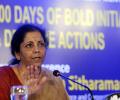
Finance Minister Nirmala Sitharaman announced that India's real GDP grew by 7.8 per cent in the April-June quarter, surpassing the RBI's forecast. She attributed this strong performance to government reforms and agile economic management, reaffirming the government's commitment to expanding economic opportunities.

The FCNR (B) stratagem relies on using public money to defend the rupee. The State subsidises foreign borrowing to attract dollars. This tool requires large-scale borrowing to make a material difference against a gross external flow of $11 billion a day. A commensurately large fiscal cost falls upon the exchequer. The ministry of finance will choose how much it is willing to spend in exchange for this round number, points out Ajay Shah.

The Finance Ministry has started preparations for Budget 2014-15 by asking different central ministries and departments to come out with their estimates of receipts as well as expenditure for the next financial year.
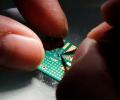
The Finance Ministry's expenditure department has approved a substantial Rs 1.25 lakh crore outlay for India Semiconductor Mission 2.0, significantly increasing the country's investment in global chip-making ambitions and aiming to establish India as a major semiconductor hub.

'It is a blunt and dangerous attempt to pressure India to sign BTA on one-sided terms.'

Nepal is grappling with a deepening flood crisis as the death toll from devastating flash floods in Rasuwa and surrounding districts has tragically risen to 538, with authorities now warning of a fresh flood threat and initiating evacuations.

Russian President Vladimir Putin is set to visit India for a three-day trip to attend the 18th BRICS Summit and engage in bilateral discussions with Prime Minister Narendra Modi. The summit will focus on strengthening strategic partnerships and addressing international issues, with Putin also scheduled to meet other world leaders.

The US push for clearer crypto rules is putting pressure on India to fill its own regulatory gap for virtual digital assets.

The National Payments Corporation of India (NPCI) stated that the Merchant Discount Rate (MDR) "is distributed only amongst the UPI ecosystem, to further invest into infrastructure resilience, innovation, cybersecurity (protecting the UPI infrastructure with banks and non-banks) and customer service."

The government is introducing a 0.4% Merchant Discount Rate (MDR) on UPI person-to-merchant payments above Rs 2,000, effective October 15. This move ends the zero-MDR regime, aiming to fund UPI infrastructure and sustainability, as the previous government subsidy was insufficient to cover operational costs. Payments between individuals and most everyday merchant transactions will remain free.

India's proposal to link BRICS payment systems, including central-bank digital currencies (CBDCs), was notably absent from the grouping's New Delhi Declaration, despite being a key agenda item for India's chairmanship. This omission leaves the 16-year effort for trade in local currencies without a settled payment architecture, with the declaration only 'acknowledging' the work of the BRICS Payment Task Force.

The Retailers Association of India (RAI) has voiced concerns that the government's new 0.4 per cent Merchant Discount Rate (MDR) on UPI transactions above Rs 2,000 could reverse the progress of digital payment adoption among small retailers. This fee, effective October 15, places the burden on merchants operating on thin margins, potentially pushing them back to cash transactions and undermining the government's formalisation agenda, especially ahead of the festive season.

The Unified Payments Interface (UPI) has completed a decade since its launch, becoming the backbone of India's digital payments ecosystem. It has seen exponential growth in transaction volume and value, expanding financial inclusion and setting a global benchmark for real-time payments.

Chinese President Xi Jinping's upcoming visit to India for the BRICS summit is a pivotal diplomatic event poised to significantly impact bilateral ties and global cooperation amidst ongoing international instability.
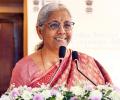
Finance Minister Nirmala Sitharaman stated that India is likely to sustain economic growth of 7 per cent or more in 2026-27, continuing the pace recorded since the Covid-19 pandemic, despite geopolitical uncertainties and supply-chain disruptions.

The focus is now on accelerating PSP development through faster approvals, better-quality detailed project reports (DPRs), simplified clearances, and early excavation permissions. Speaking at a recent event, Prasad said hydropower and PSPs would be central to supporting India's renewable energy expansion by providing the reliable and flexible capacity needed to balance rising solar and wind generation. "A huge amount of variability is getting introduced into the grid.

India was on Friday accorded the vice presidency of the Financial Action Task Force (FATF), the global body that sets standards for combating money laundering and terrorist financing, for the first time.

'You have to get private investment to somewhere between 35% to 36% of GDP. It is hovering about 30%-31%.'

'Wages have not risen. Rural wages have stagnated. The growth was 0.7 per cent last year. For casual and irregular labour, the wage growth is negative.'

The Directorate of Revenue Intelligence has conducted a nationwide crackdown on wildlife trafficking, seizing over 440 endangered animals and 15 kg of ivory, and arresting 33 individuals involved in organised crime syndicates.

US President Donald Trump is expected to sign the Lindsey O. Graham Sanctioning Russia and Iran Act of 2026 later on Friday (local time). A White House official confirmed the development to ANI without revealing further details.

India has strongly refuted claims by the United States Trade Representative (USTR) regarding excess capacity in its steel and textile sectors, arguing that the nation's significantly low per capita consumption of these products contradicts such assertions, according to Amitabh Kumar, Additional Secretary in the Ministry of Commerce.

'The sales pressure on the ground, a board and CEO not fully aligned, and a senior team that isn't pulling together -- that's when these things surface.'

A savings or current account with no customer-induced transaction for more than 24 months is classified as inoperative.

NPCI International Payments Ltd (NIPL) and Maldives Monetary Authority (MMA) have successfully integrated the Maldives' instant payment system 'Favara' with India's Unified Payments Interface (UPI). This enables real-time fund transfers from Maldives to UPI-enabled Indian bank accounts, marking a significant step in cross-border digital financial connectivity and bilateral economic cooperation.
Prime Minister Narendra Modi cautioned against the 'weaponisation' of technology and critical minerals at the BRICS summit, advocating for cooperation to foster shared prosperity. Concurrently, Chinese President Xi Jinping announced plans for an open-source AI ecosystem for BRICS nations, positioning Beijing as a key technology partner amid global AI competition.

The National Testing Agency (NTA) is undergoing significant reforms, including the removal of over 50 staff members and the onboarding of new leadership and domain specialists. This comes after recent issues like errors in UGC-NET papers, leading to re-tests, and the cancellation of NEET-UG 2026. The Education Ministry has directed a complete overhaul of exam protocols and a thorough audit of all processes to ensure integrity.

The Ministry of External Affairs reported that 275 Indians remain missing following devastating flash floods along the Nepal-Tibet border, while 166 others have been rescued. India has supplied 95 tonnes of relief material and deployed 54 personnel, including rescue and forensic experts, to assist Nepal. The death toll in Nepal has reached 1,295, with thousands still missing, and significant infrastructure damage reported. India has also highlighted the need for developed countries to lead in climate change action.
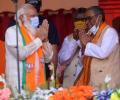
Ten days after the expansion of the BJP government's cabinet in West Bengal, key portfolios have been allocated, with senior leader Tapas Roy taking charge of industries and journalist-turned-politician Swapan Dasgupta appointed finance minister.

Jeetu, as he is known in the IAF, is known for his high intellect, ability to quickly grasp the essentials of complex situations and the readiness to articulate his views clearly and unambiguously. An excellent professional in every sense of the word, he has a well-trained military mind, honed by extensive operational flying and flight testing experience, avers Air Marshal B Manikantan (retd).

India has highlighted 13 key outcomes from the recent Shanghai Cooperation Organisation (SCO) summit, focusing on enhanced cooperation in security, counter-terrorism, and addressing transnational threats. These outcomes include the establishment of a Universal Centre for Countering Challenges and Threats to Security, a strong stance against state-sponsored terrorism, and agreements on narcotics control, climate change, and artificial intelligence, reinforcing India's engagement in the Eurasian region.
